
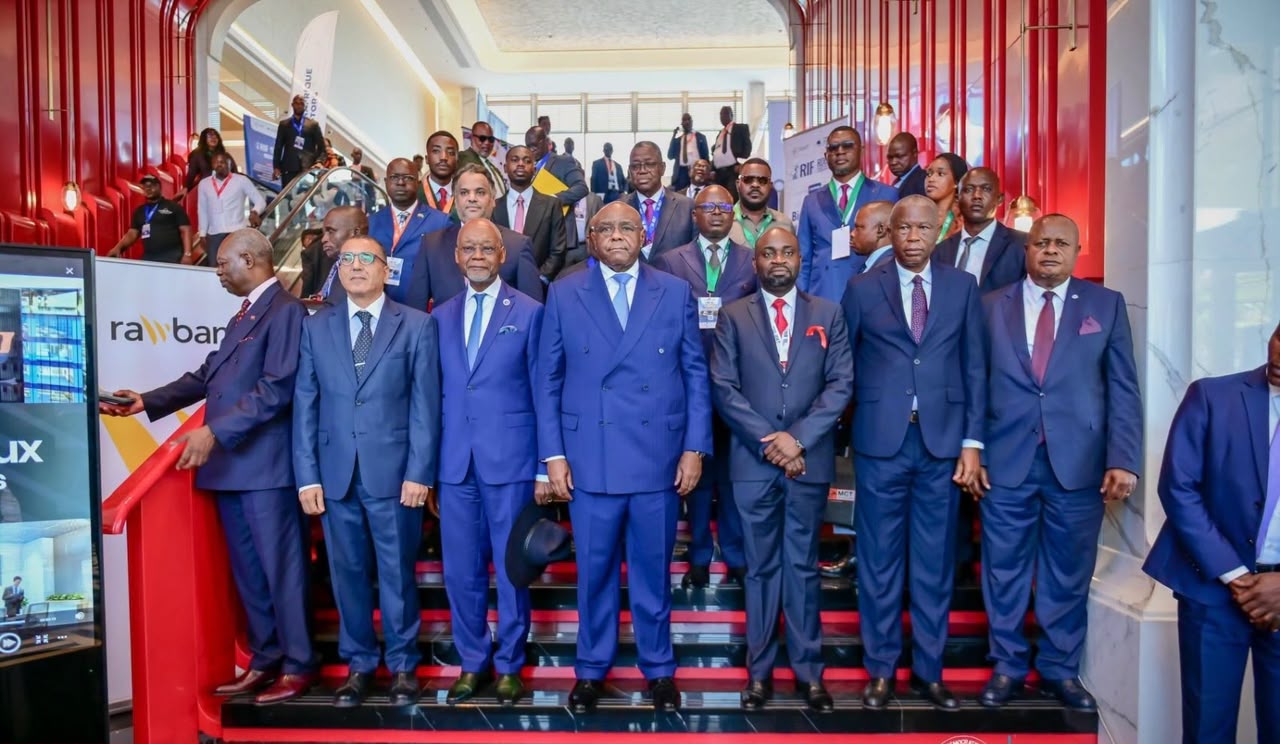
Organized from 26 to 28 October 2026, the Forum on Transport Infrastructure and Logistics Investments (RIF2026) brought together public and private actors in Kinshasa on infrastructure financing, corridor development and regional connectivity.
Deputy Prime Minister Jean-Pierre Bemba, in charge of Transport, Communications and De-enclavement, launched on 26 October in Kinshasa the third edition of the DRC Transport Infrastructure & Logistics Investment Forum (RIF2026).
The meeting, organised under the patronage of President Félix-Antoine Tshisekedi Tshilombo, was held until 28 October. It brought together private investors, technical and financial partners, experts and representatives of institutions and partner countries.
Trade focused on ways to develop transport infrastructure and better integrate Congolese territories into regional and international trade channels.
In particular, discussions focused on the transformation of infrastructure into economic corridors capable of linking production basins to markets.
For Bodom Matungulu, chairman of the DRC Strategy think tank, the country's geographical position is only an advantage if it allows producers access to business opportunities and businesses to transform resources locally.
Jean-Pierre Bemba also stressed the operational conditions necessary for smooth trade, including administrative procedures, customs operations and coordination between States.
These issues are part of the national de-enclavement programme, which provides for the development of 22,800 kilometres of roads and railways.
Presented in October by the Minister of Infrastructure and Public Works, John Banza Lunda, the program gives priority to the corridors of Banana, Lobito and Peace, as well as to their connection to the central corridor, which serves the port of Dar es Salaam in Tanzania.
The Lobito corridor, linking southern DRC and Zambia to the Angolan port of Lobito, is one of the main areas of regional trade development.
Beyond the construction of infrastructure, the forum raised the question of their local economic benefits. Among the issues discussed were reducing transport costs, facilitating cross-border trade and developing activities along corridors.
In this context, the European Commission announced in October 2025 a grant of €6 million, or approximately $6.7 million, to TradeMark Africa to support the simplification of customs and trade procedures between the DRC and Angola.