
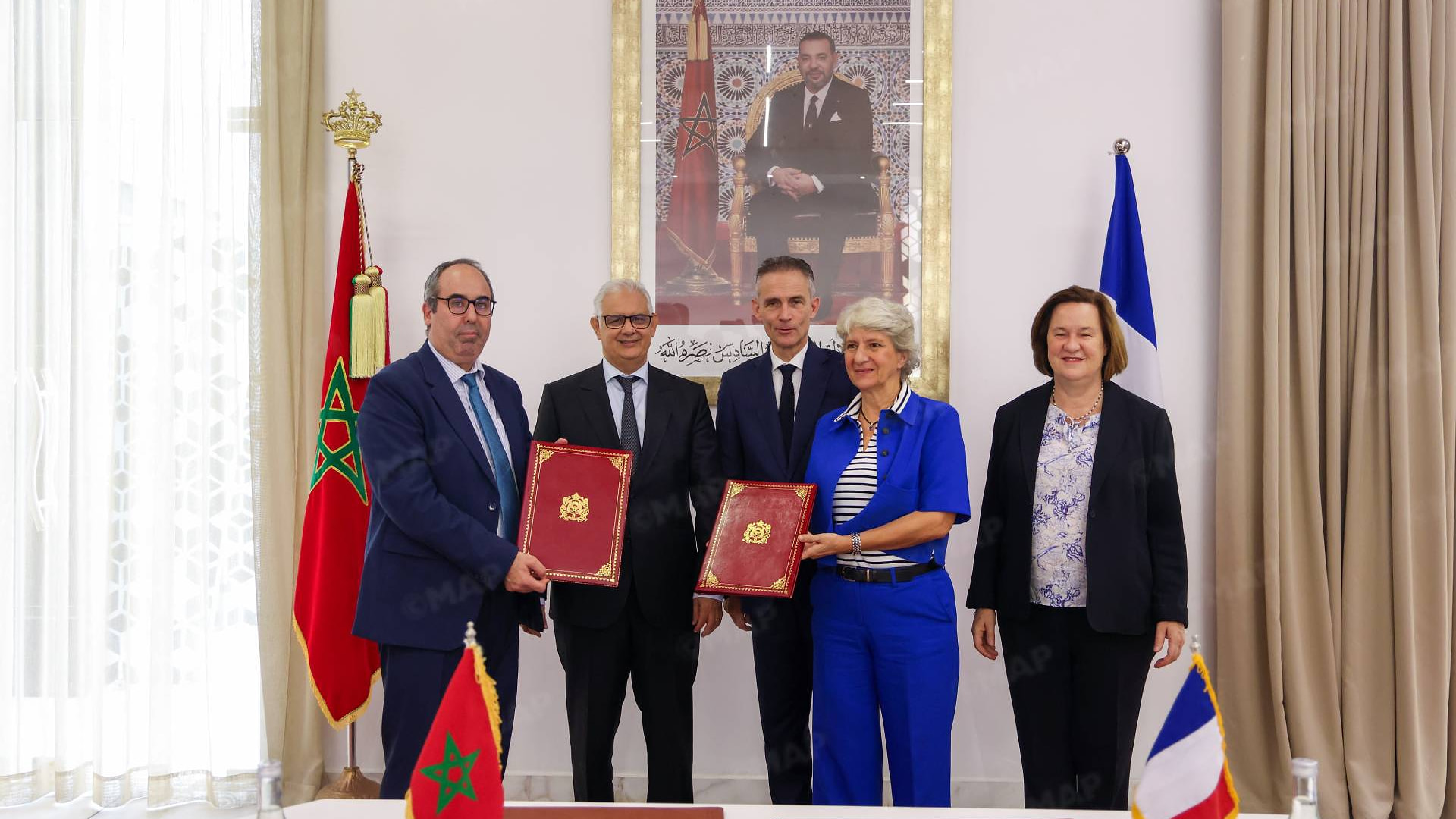
The French Development Agency (AFD) and the National Ports Agency (ANP) of Morocco have concluded a third financing agreement of EUR 100 million on 3 November 2026 in Rabat. This loan must accompany the Moroccan port investment programme 2023-2030, with particular attention to the facilities of the Atlantic facade and the southern provinces.
According to the information provided, the financing takes the form of a 13-year non-sovereign loan, without guarantees from the Moroccan State. It must cover several areas: rehabilitation of port infrastructure, development of renewable energy and desalination, modernisation of fishing ports and electrification of docks and decarbonisation of port activities.
Part of the investment concerns the ports of Tan-Tan, Tarfaya, Laayoune, Boujdour, Dakhla and Lamhiriz. These facilities occupy a place in the Moroccan strategy to develop maritime connections on the Atlantic facade and to facilitate trade with African markets.
This is part of the national port strategy for 2030, which also provides for the strengthening of infrastructure to serve the landlocked economies of the Sahel, including Mali and Niger.
This policy takes place in a context of increasing port traffic. According to data from the Moroccan Ministry of Water and Equipment cited, the Kingdom's ports handled 262.6 million tons of goods in 2025, compared with 241.2 million tons in 2024, an increase of 8.9%.
Tangier Med recorded 10.3 million TEUs in container transhipment, up 7.9% over one year. The development of Nador West Med and the planned extension of Tangier Med, with a new terminal of 4.5 million TEU entrusted to APM Terminals, are also part of this evolution of the harbour network.
The new agreement extends a financial partnership initiated in 2012 between AFD and ANP. The first loan amounted to EUR 50 million, followed by EUR 100 million in 2020, with a grant of EUR 800,000.
For Morocco, the challenge will now be to translate these investments into effective processing capabilities and logistics connections. The competitiveness of the facilities will also depend on their land use, their attractiveness to shipowners and their ability to capture regional trade flows.