
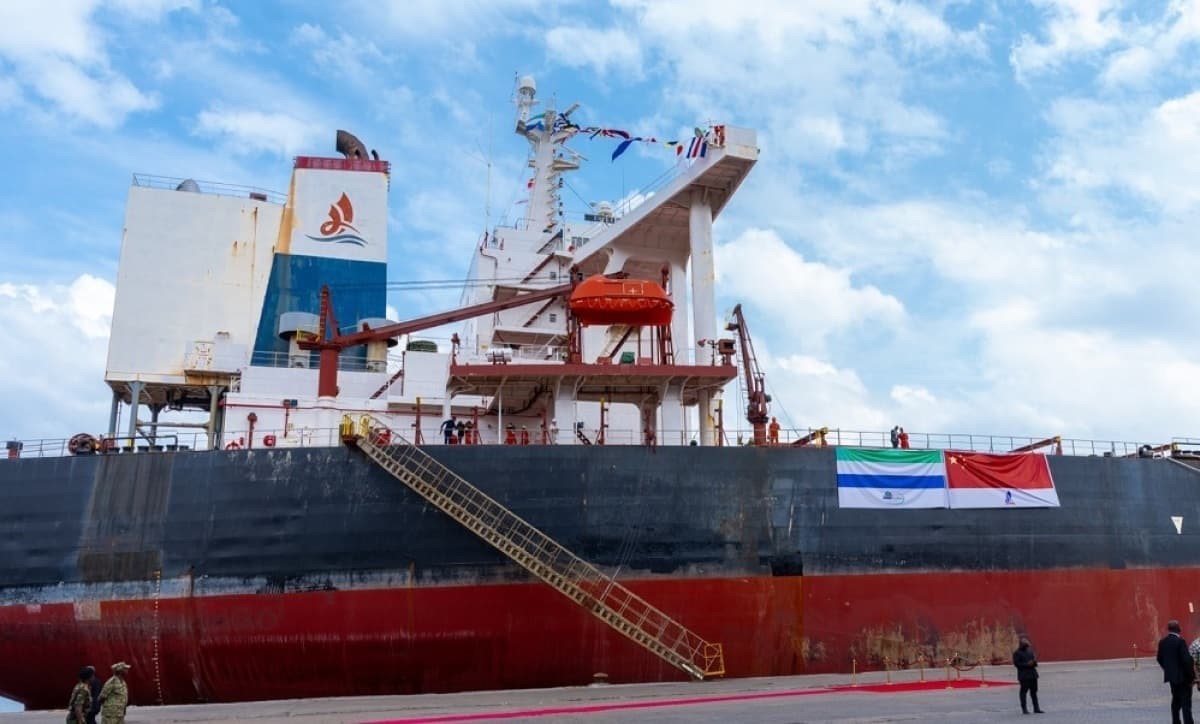
On 19 October 2026, President Julius Maada Bio inaugurated the Sierra Leone Ocean Shipping Company (SLOSCo) in Freetown. As a result of a partnership between a public agency and a Chinese group, the company plans to build a fleet of 50 vessels to increase the country's participation in international shipping.
The Sierra Leone Ocean Shipping Company (SLOSCo) was officially launched at Queen Elizabeth II wharf in Freetown, in the presence of President Julius Maada Bio. The company is a joint venture between the Sierra Leone National Shipping Agency (SLNSA), which owns 30 per cent of the capital, and the Chinese group Zhejiang Xiehai (Zhejiang Xiehai Group Co. Ltd.), which owns 70 per cent.
The Government intends to develop a national freight capacity and reduce its dependence on foreign shipping companies to transport its imports and exports.
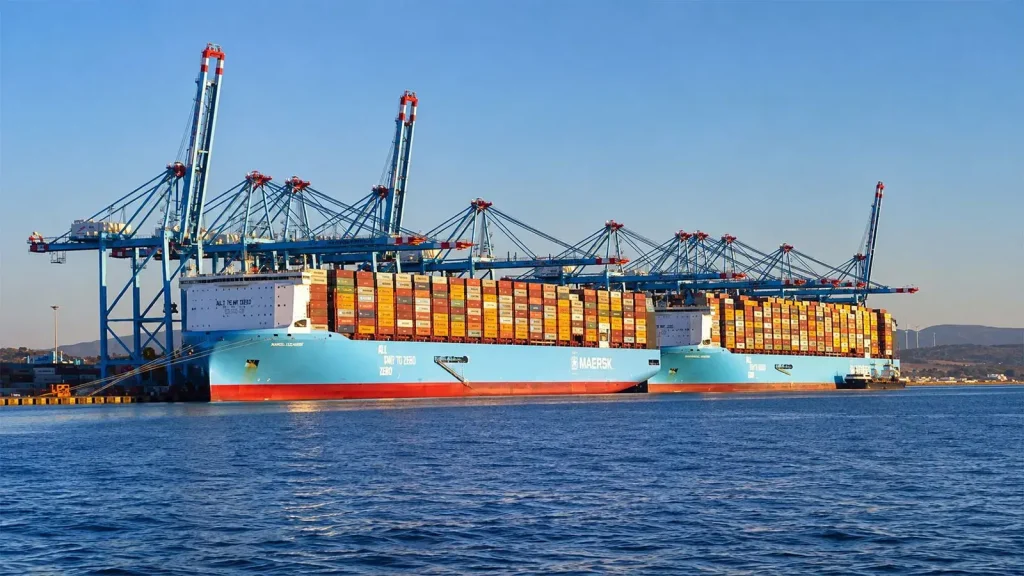
The project envisages the creation of a fleet of 50 vessels, 30 of which are in the first phase. This capacity should enable the new company to participate more in the transport of goods related to the country's foreign trade.
During the ceremony, President Julius Maada Bio stressed the need for Sierra Leone to capture more of the value generated by its international exchanges. The authorities are also expecting benefits from this initiative for the mining and agricultural sectors, as well as for companies involved in import and export.
The partnership also provides opportunities for job creation, skills transfer and training of local professionals according to the authorities.
Zhejiang Xiehai Group President Wang An mentioned the potential for cooperation in trade, mining and maritime activities. For its part, the Minister of Trade and Industry, Alpha Ibrahim Sesay, called for the participation of local companies in the development of the company.
However, the achievement of these objectives will depend on SLOSCO's ability to mobilize the necessary funding, acquire its vessels and attract sufficient volumes of goods to ensure its operation. Competition from international operators already established on African maritime routes is another challenge.
Beyond the creation of a fleet, the viability of the company will depend on the choice of its routes, its commercial management and its ability to provide services tailored to the needs of Sierra Leonean exporters and importers.