



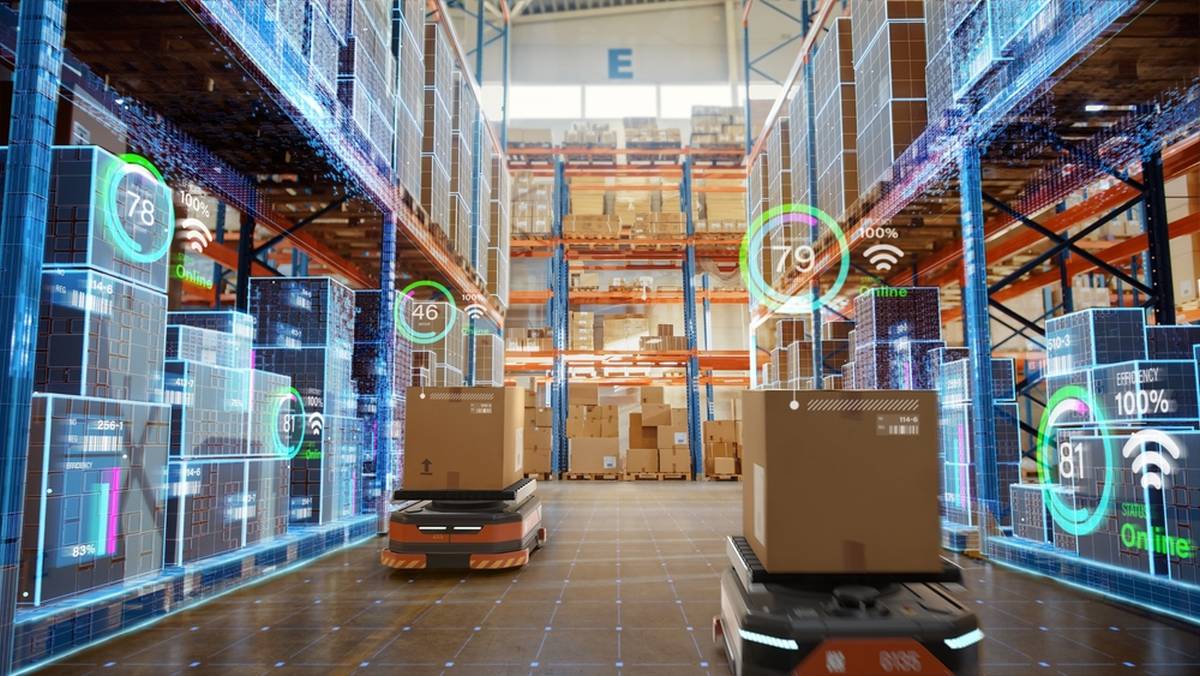
In a forum published on July 31, 2026, Pierre Chafardon, Commercial Director of Generix Group, believes that artificial intelligence should not be seen as a tool to replace logistics jobs, but as a lever to refocus employees on missions with higher added value. A reflection that comes as supply chains face increasing challenges in terms of resilience, performance and human resources.
For the author, tensions on supply chains – geopolitical instability, volatile demand, environmental demands and labour shortages – accelerate the use of digital technologies.
In this context, artificial intelligence and automation can help to support repetitive tasks, such as compliance, traceability or certain administrative operations, to allow teams to focus more on analysis, problem solving and continuous process improvement.
The forum also highlights the expected evolution of the role of Supply Chain officials. By automating data collection and processing, managers could devote more time to flow management, risk anticipation and decision-making.
Artificial intelligence is thus presented as a decision-making tool capable of simulating different operational scenarios, without replacing human judgment, which remains indispensable for integrating the realities of the field, social issues or strategic arbitrations.
Pierre Chaffardon also believes that this transformation will involve an evolution of managerial skills. Logistics managers will have to manage hybrid environments involving collaborators, automated systems, robots and artificial intelligence tools.
This will require new skills, including the ability to interpret the recommendations produced by algorithms, to identify their limitations and to support teams in the adoption of these technologies.
While this reflection is part of a global perspective, it finds a special echo in Africa, where many logistics players accelerate their digital transformation in order to improve the visibility of flows, the traceability of goods and operational performance.
In several countries, investments in digital platforms, warehouse automation or data analysis solutions are increasing, while the sector simultaneously seeks to strengthen local skills.
According to the analysis developed by the CEO of Generix, the success of this transition will depend less on the technology itself than on the ability of companies to integrate artificial intelligence into an approach of organizational transformation and skills development.




