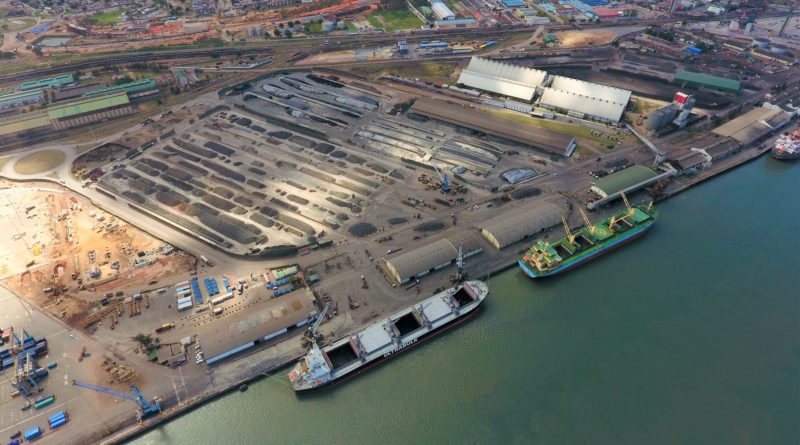

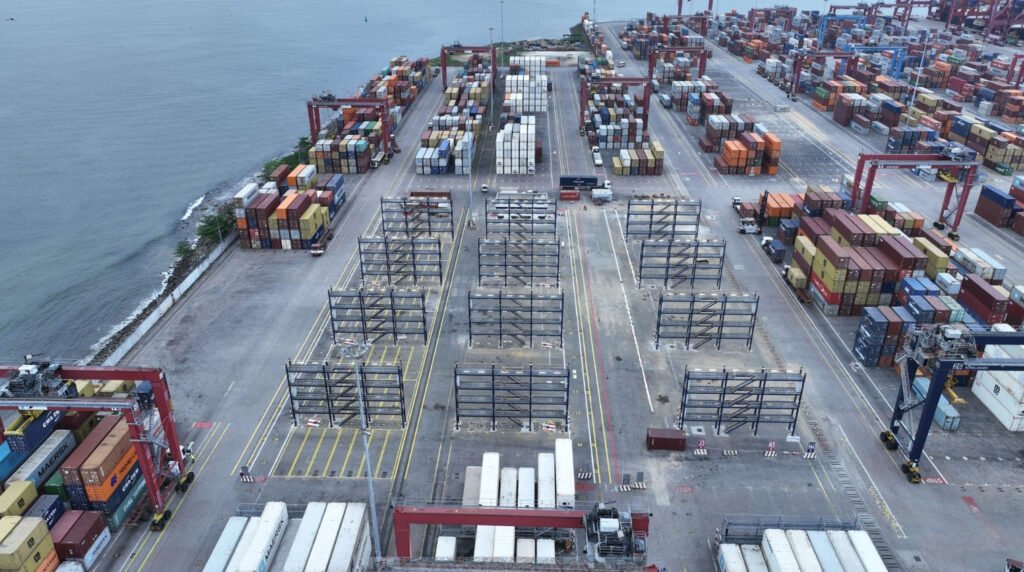
The project carried out by Congo Terminal, a subsidiary of Africa Global Logistics (AGL), must strengthen the capacity of the autonomous Port of Pointe-Noire while introducing fully electric handling equipment. Its commissioning is expected to increase the port's annual capacity to 2.5 million TEUs and create 900 direct and indirect jobs.
Congo Terminal continues the work of the East Pole, a new harbour platform that must become, to its commissioning, the first terminal of the Republic of Congo operated exclusively with electrical handling equipment.
The project is part of the global investment programme of one billion euros committed by AGL between 2009 and 2027 to develop its logistics and port activities. It aims in particular to support the growth of the volumes processed at the Port autonome de Pointe-Noire.
The terminal will be equipped, from its launch, with five electric dock gates (STS), 15 electric park gates on tires (e-RTG) and 30 electric port tractors (e-TT).
Energy management systems will also monitor and control real-time power consumption. According to Congo Terminal, the use of these equipment must help to reduce direct emissions from handling operations, while improving the speed of operations and limiting noise pollution.
For Anthony Samzun, general manager of Congo Terminal, the project builds on the expertise of AGL in the management of harbour terminals and must allow to develop in Congo an infrastructure meeting the recent standards of the field.
The electrification of the East Pole comes as ports and maritime transport actors face increasing requirements for emission reduction and energy efficiency.
Beyond its technical characteristics, the project must strengthen Pointe-Noire's role in regional exchanges. Its commissioning is expected to increase the annual port processing capacity to 2.5 million TEUs and generate 900 direct and indirect jobs in port operations, maintenance of electrical equipment and logistics activities.
The terminal must also contribute to the fluidity of the supply chains of the landlocked countries of the hinterland which use the Congolese port for their trade with international markets.