



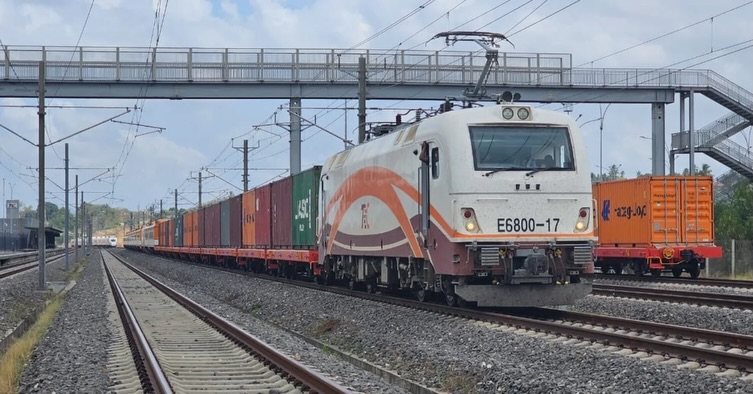
On 20 July 2026, Tanzania launched the sixth batch of its standard gauge railway network (SGR), a 506-kilometre electrified line between Tabora and Kigoma. The project, valued at approximately $2.74 billion, will link the western part of the country to the port of Dar es Salaam and improve trade connections with the Great Lakes region.
The launch ceremony was held in Kigoma under the chairmanship of Samia Suluhu Hassan. The line is the sixth batch of the SGR program and will be built by a consortium of China Railway Construction Corporation (CRCC) and China Civil Engineering Construction Corporation (CCCC).
The project is to link Kigoma to the national railway network and allow the transport of passengers and goods to Tabora, then to Shinyanga, Mwanza, Dodoma, Morogoro and Dar es Salaam.
The project should also strengthen the role of the port of Dar es Salaam as a maritime access point for landlocked countries in East and Central Africa.
The railway connection with Kigoma should facilitate access to Lake Tanganyika and the markets of the Democratic Republic of the Congo and Burundi. It should also be linked with the future Uvinza-Musongati rail link, which is intended to link Tanzania with Burundi. In the long run, Tanzanian authorities are also considering a connection with Zambia.
The government plans to reduce travel times and costs for passengers and goods. In particular, the rail route should facilitate trade between the Indian Ocean coast and western Tanzania, while supporting commercial, agricultural, mining and tourism activities.
As part of this strategy for the development of multimodal connections, four new ships for the transport of goods on Lake Tanganyika must also be put into service, while the freight terminal at the port of Kigoma has been renovated.
The Tabora-Kigoma project is part of the second phase of the Tanzania RMS programme. This phase also includes the Uvinza-Musongati section, with a total of 1,590 kilometres of planned tracks.
The first phase covers the 1.219 km link between Dar es Salaam and Mwanza. Upon completion of both phases, the Tanzanian SGR network is expected to reach 2,809 kilometres, with the aim of improving national links and regional exchanges across the central corridor.




