




The Democratic Republic of the Congo has signed with the Portuguese group Mota-Engil a 30-year concession for the rehabilitation, modernization and operation of the Dilolo-Sakania railway line. This infrastructure is about 1 004.5 km long and must link the mining basins of south-eastern Congo to the Angolan railway network and the port of Lobito.
Signed on 26 August 2026 in Kinshasa, the contract provides for an indicative investment of approximately $1.25 billion. The concession covers studies, rehabilitation, modernisation, extension, operation and maintenance of the line, which includes Dilolo, Kolwezi, Tenke, Lubumbashi and Sakania. After 30 years of operation, the infrastructure will have to be transferred to the Congolese State.
The assembly provides for a stake of at least 10% of the Congolese State in the company in charge of the project, as well as a levy representing 7.5% of the gross annual turnover generated by the infrastructure.
According to the Congolese authorities, financing and traffic risk will be borne by the concessionaire, without sovereign guarantee, operating subsidy or minimum income guarantee from the State.
The Société nationale des chemins de fer du Congo (SNCC) will also retain its transport activities and the exclusivity of rail passenger transport.
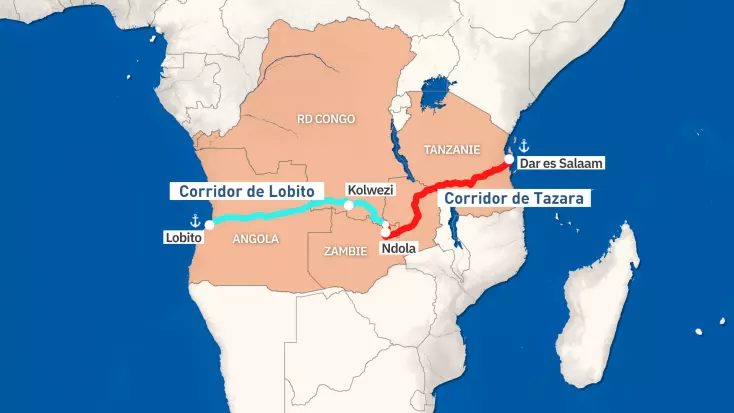
This concession strengthens Mota-Engil's presence on the entire railway axis of the Lobito corridor. The Portuguese group already participates, alongside Trafigura and Vecturis, in the Lobito Atlantic Railway consortium, concessionaire of the Angolan line linking the port of Lobito to the border with the DRC.
The development of the Dilolo–Sakania section is intended to ensure rail continuity between Zambia, the main mining areas in the south-eastern Congo and the Atlantic façade.
The challenge will now be to attract regular volumes of goods on this new road. In particular, the Congolese authorities aim to increase the use of the corridor for the export of copper, cobalt and zinc concentrate, while the infrastructure will also be able to transport other goods and industrial products.
However, the corridor will have to compete with the routes already used by mining operators to the ports of Durban, Dar es Salaam and Beira, demonstrating its competitiveness in terms of costs, deadlines and reliability.




