



Article from Africa Supply Chain Magazine – N°17, Brahim Ndiaye : Supply Chain Professional
From field to plate, each degree counts. On the continent, a considerable part of the harvest disappears before even reaching the one who was to consume it. Controlling the cold therefore has nothing to do with technical refinement: it has become a matter of food sovereignty. And it is precisely there that the Lean Thinking thought makes sense.
A journey that starts long before harvest
The supply chain is readily seen as a truck connecting a point A to a point B. The reality is longer, and more demanding. It all starts with the intention of growing — choice of variety, planning of surfaces — and only ends once the product is placed on the consumer's table. Between these two moments a dozen steps follow: sowing, watering, allowing to ripen, picking, conditioning, transporting to cold, storing, distributing, radiating.
Each has its own window of time. Each has its own fragility. A tomato picked too soon will never have the taste that is expected; Picked too late, she's already started to get rid of herself. This is the useful life — the product life time — which controls all logistics. At the bottom, we don't carry food: we run against its biological clock, and this clock doesn't go up.
The refrigerated container: central link, breaking point
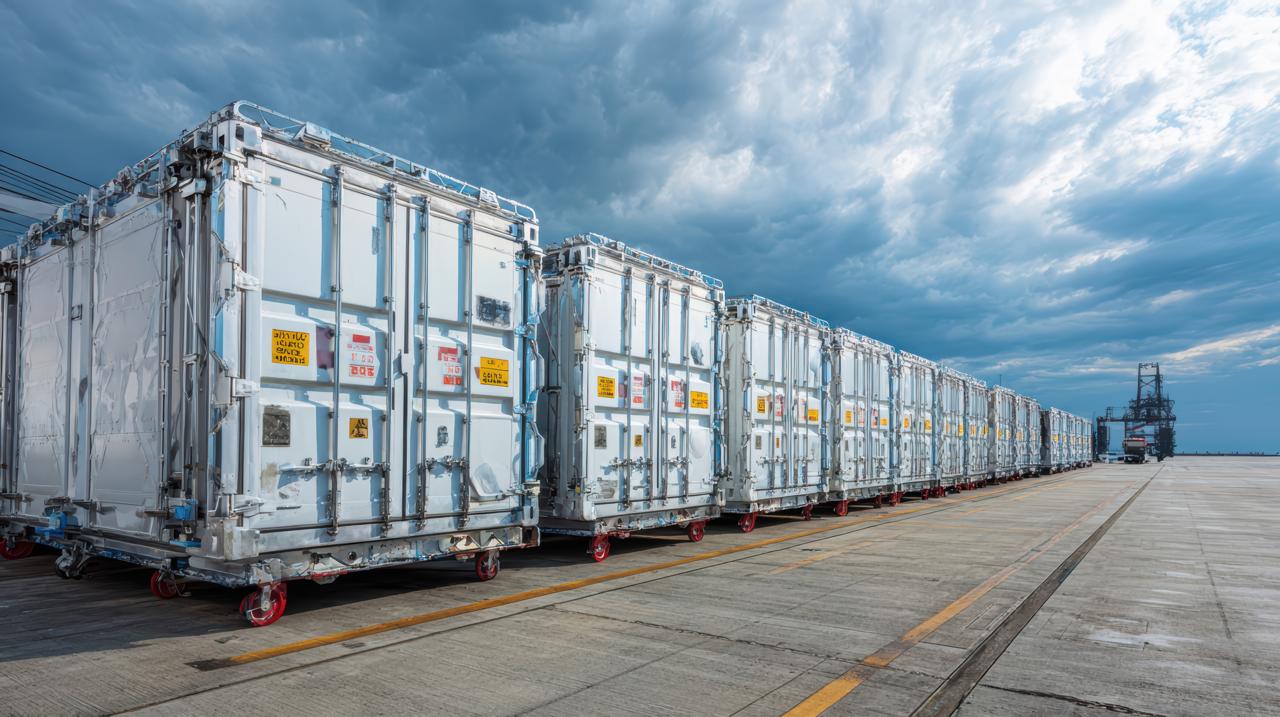
A decisive part of the journey lies in one thing: placing the food in the right environment, most often a refrigerated container, this reefer that preserves freshness on hundreds, sometimes thousands of kilometres of uneven tracks and roads.
This central link is also the most vulnerable. Wait times — at borders, in ports, at each transhipment — break the continuity of the cold. And every break, even a few minutes, has a price: microbial proliferation accelerates, the rates of alteration rise. The risk didn't matter. A stock that has been immobilized for too long under bad conditions can lose all its value before it has found a buyer.
Thinking about Lean Thinking: tracking waste, securing flow
This is where the Lean Thinking thought comes in. A result of industry, this approach pursues a stubborn idea: to remove any form of waste — of time, matter, movement — to keep only what creates value. Transposed to the cold chain, it upsets the way to reason.
The principle holds in one sentence, but its implementation requires rigour: each step must be ready before the product n The refrigerated truck is waiting for the goods, never the reverse. Customs papers are closed before docking. The dock is free at the time said. Any expectation spared is the freshness preserved — So value saved.
To this discipline answers an indicator borrowed from the modern logistics: the OTIF, for On Time, In Full — the hour and in full. Deliver punctually but with a half damaged cargo, or deliver intact with three days delay: in both cases, it is a failure. THE OTIF judges the entire promise. For foods that do not wait, it is difficult to find a more honest benchmark.
African barriers: energy, regulation, environment
Energy dependency
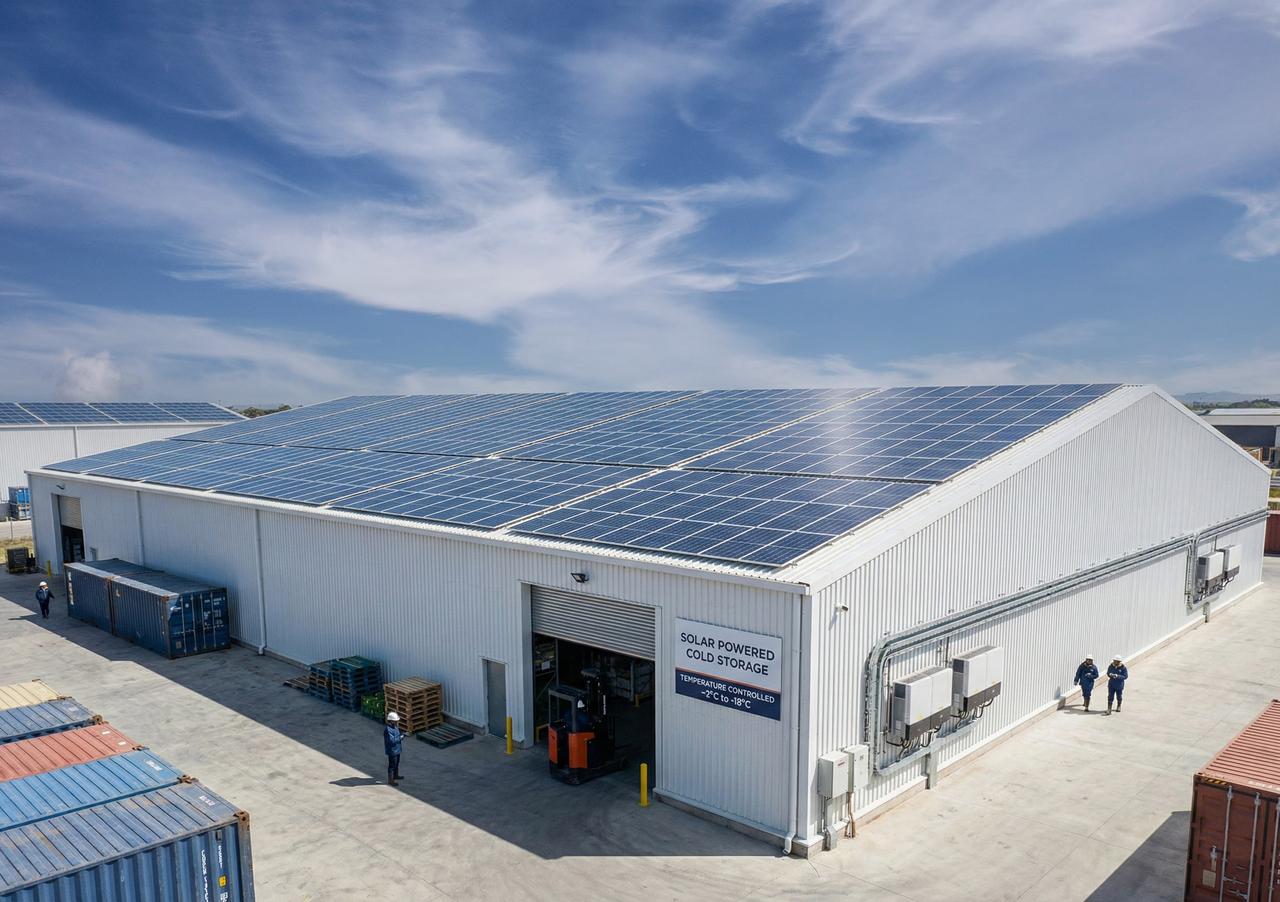
Cold costs a lot of energy, it's its very nature. Maintaining a constant temperature requires reliable current — bet far from being won where the network is flickering or lacking. This dependency weighs directly on costs, to the point of being a pillar in its own right. Without controlled energy — solar, groups, storage — There is simply no controlled cold.
An evolving regulatory framework
Texts and administrations often evolve in a certain opacity, sometimes with little attention to the thousand factors that decide the quality of a commodity. Unforeseen procedures, fluctuating clearance times, changing requirements: as many uncertainties as a perishable product absorbs poorly. This unpredictability is, in practice, one of the first causes of loss.
Storage and the environment
Remain storage and all immediate environment — climate, ambient heat, but also the hands that handle the goods. A badly insulated warehouse, exposure to the sun during loading, a negligent gesture: everyone raises the risk of a cranium. In a warm climate, the margin of error is thin, and it does not forgive.
Form and measure: make the chain visible
Faced with this complexity, two levers detach. The first is training. An operator who knows why ten minutes of break-up will not work like the one who doesn't know. The second, performance indicators at each stage. It is a matter of following the whole course, without a blind angle:
- Seed and watering — fidelity to the culture plan;
- Maturity and harvesting — harvest at the right time, not too soon or too late;
- Packaging — a packaging designed to preserve;
- Cold transport — continuous temperature, waiting times monitored;
- Storage and distribution — storage conditions, stock rotation.
The lens holds in one image: a visibly ordered chain, where each step is plotted and where the slightest failure comes to mind. It is by making the flow visible that we discover its faults — And we can finally correct them. Following the steps is not a bureaucratic blush. This is what makes it possible to act before the loss, rather than to deplore it afterwards.
The purpose: to sell, and to be able to live from it
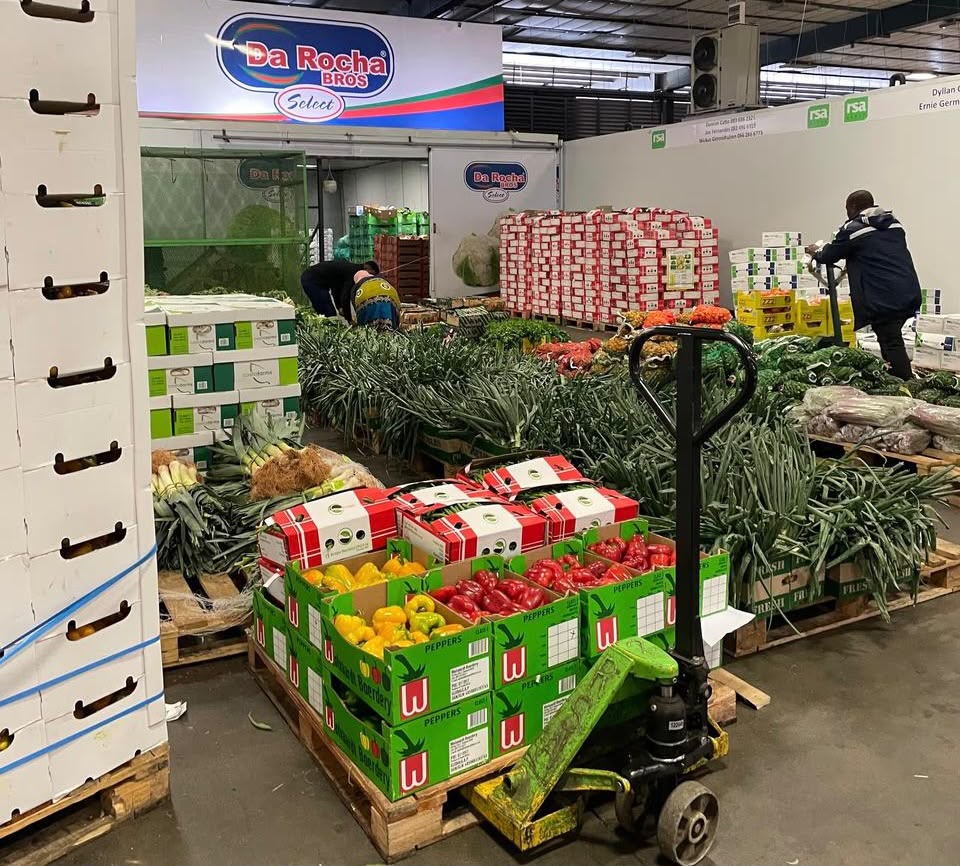
At the end of this whole building, there is a simple goal, which one would be wrong to forget. What farmers are looking for is neither more nor less than selling their production and living from it. The cold, the traceability, the indicators: none of this will be of value if this elementary purpose is not served.
And the equation, in this profession, leaves little respite. The reason for this is a 200% gain or loss, with no intermediate grade. The logic is implacable: the cargo is intact and delivered in time, the margin can be beautiful; lost cargo, the result account immediately switches from green to red. The perishable has this cruelty to push the result towards its two extremes, without buffer zone. This is what makes the mastery of each step not a comfort, but a necessity.
Public levers: creating the conditions for success
The farmer cannot bear such a burden alone. A whole ecosystem can level the ground — to start with the public authority, which is to lay down the conditions of departure:
- A clear framework: legible laws, predictable procedures, which finally stop fuelling losses;
- Local and international agreements: trade and customs agreements that ease the flow of goods;
- Major infrastructure financing: water, land, development, seeds available, energy, adequate storage, secure transfer, environment, roads, timing, administration, authorisation, quality control — the foundations of any supply chain;
- The training and interest of young people: making agrologistics a future sector, supported by a trained and mobilized generation.
It remains a question of sequence. It is best to focus first on the local market: circuits are short, losses are easier to contain, immediate needs. Then comes the regional market, then only then the international market. Moving from the near to the far is to consolidate its bases before facing the logistical requirements of export.
For reflection
The future of the cold chain in Africa will decide not only in container technology, but in the way of thinking the flow. Lean thought offers the framework: to remove expectations, to prepare each step, to make the chain readable and measurable.
Backed by a secure energy, guided by benchmarks like OTIF, carried by a true culture of traceability, it can transform a loss-ridden system into a lever of food sovereignty. Because behind every degree held, there is a saved harvest — and, at the end of the chain, a producer who lives from his work and a meal on the table.




