

Article from Africa supply chain magazine – n°17 By Oumou Sumano – Expert Supply Chain & Grande Distribution
Large-scale distribution is gradually becoming an actor structuring African agri-food chains. Beyond its commercial role, it directly influences the organisation of the sectors, quality standards and the logistical performance of companies. Between the requirements of regularity, traceability and flow control, it pushes producers and processors to reorganize in depth. This article examines how this segment of distribution can become a true accelerator of transformation and value creation for agri-food supply chains in Africa.
The African paradox: Africa produces. The challenge now is to better value.
Africa has exceptional agricultural potential: The continent accounts for nearly 60% of the world's uncultivated arable land. A major asset in a context where food security and local transformation issues become strategic.
Yet this wealth is still undervalued. FAO estimates that a significant share of agricultural production is lost between harvest and consumption. These losses do not only reflect a production problem.
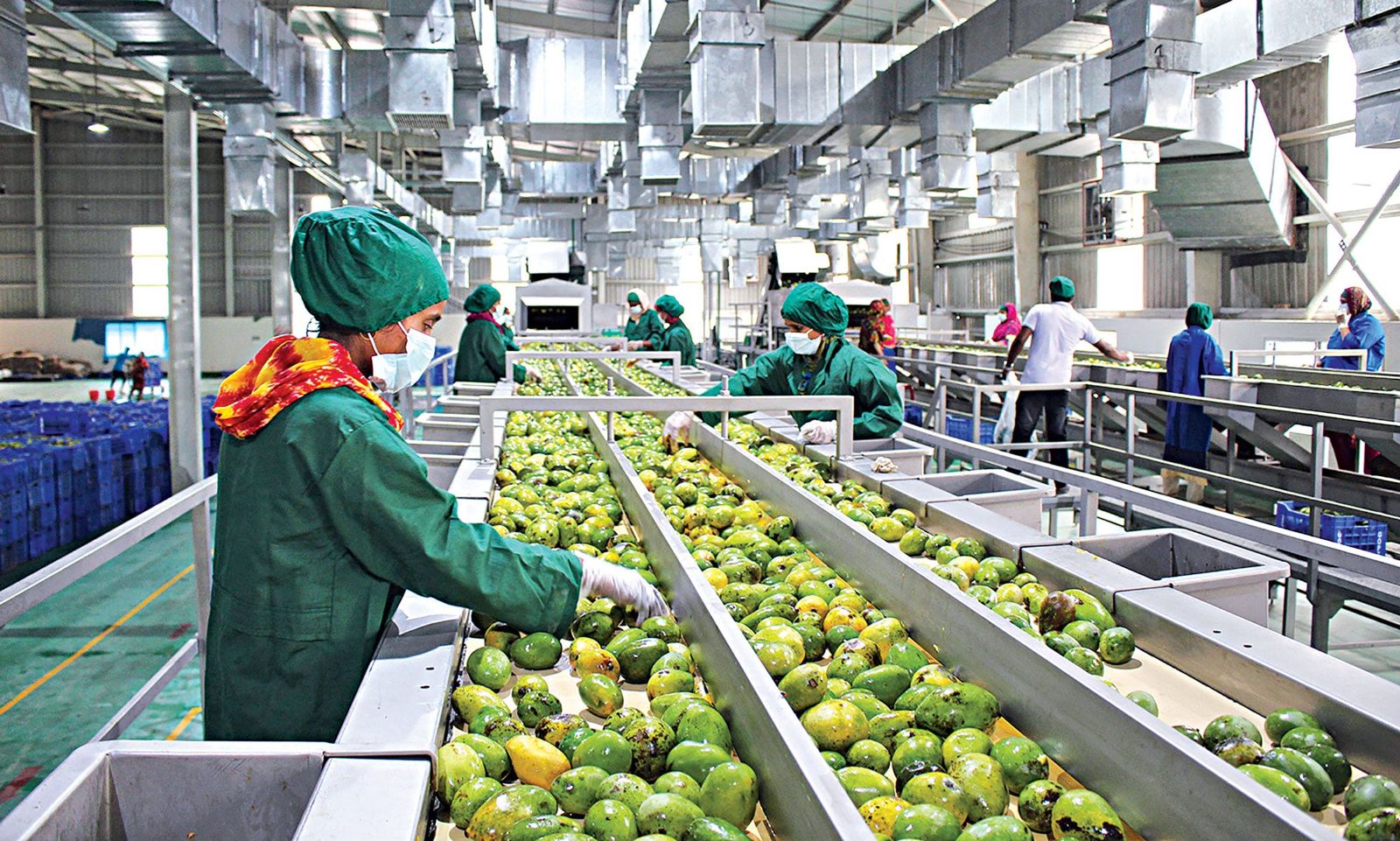
Above all, they reveal structural weaknesses in supply chains: lack of transformation, insufficient storage, fragile logistics and limited access to organised markets. Much more than wasting food, they represent a loss of economic value for producers, processors and, more broadly, for African economies.
So the real question is no longer just « How to produce more? »but « How can we better transform, distribute and value what is already produced? ». In my view, part of the answer lies in an actor still too often perceived only as a demanding marketing channel: large distribution.
Large distribution: a structuring lever, not just a commercial outlet
When dealing with food producers or processors, the same questions arise regularly: trade terms, payment deadlines or tariff negotiations. These perceptions are understandable. But they mask an essential reality: modern distribution is above all an environment that drives the company to structure the entire value chain.
Distribution brands have high standards: they are looking for partners who can guarantee constant quality, regular production, perfect traceability, controlled delivery times and continuous product availability. These requirements may seem binding. Yet they are a tremendous lever of growth. A company that meets these standards gradually improves its internal organisation, secures its business and strengthens its competitiveness.
Beyond sales volumes, it has many advantages:
- Better exploitation of its production;
- Loss reduction through better planning;
- More rigorous inventory management;
- Better cost control;
- A more homogeneous quality;
- Increased consumer awareness;
- Increased credibility with financial partners and international markets.
Large distribution thus becomes a real accelerator of value creation. Agri-food companies no longer sell only one product: They must demonstrate their ability to perform a complete and reliable logistics service.
The field report: The real brake is not always the product
In the course of my experience in supply chain in large-scale retailing and accompaniment to agri-food companies, a finding is always made. African producers and producers often have excellent products.
On the other hand, many companies are not yet prepared for the requirements of modern distribution. Brake is not necessarily the product quality: More often, it lies in the ability to ensure regular supply, anticipate volumes, meet delivery times, build a price consistent with its cost or secure its supply chain. However, in large distribution, performance is not based solely on the product, but on the ability to deliver over time, without disruption and without variation in quality.
Why some products are never referenced
A situation frequently arises in the case of SEO projects: A buyer likes a product, taste is at the rendezvous, packaging is attractive and the commercial potential is real. However, partnership does not succeed. Why?
The reason is rarely related to the product itself. It is linked to the company's ability to maintain a stable level of service. On the other hand, some firms that are less product-intensive but are very organisationally strong are more successful in their integration into large-scale distribution.
This shows a key reality: large distribution does not only buy a product. It chooses a partner capable of meeting its commitments over time.
What large distribution imposes on agri-food businesses
Before soliciting a sign, producers and processors have an interest in preparing several aspects:
- Standardize their production,
- Adapt their packaging to market requirements,
- Meet quality standards and, where necessary, the cold chain.
- Ensure complete traceability,
- Control their cost of their tariff policy;
- Planning supplies,
- Secure volumes,
- Structure their logistics,
- Respect delivery times,
These fundamentals are not only used to convince a distributor. They help build a more robust, profitable and resilient business
Cooperatives: a strategic lever still underexploited
In the African context, agricultural cooperatives have a key role to play. They can become real structuring platforms by allowing:
- The sharing of volumes,
- Quality harmonisation,
- Centralisation of storage,
- Logistics consolidation,
- And better negotiation with distributors.
By structuring themselves, they can move from a producer-grouping role to a credible partner in large distribution.
From constraint to opportunity: changing reading and making large distribution a transformation partner
The common error is to see large distribution only from a commercial perspective. In fact, it represents a strategic partner that acts as an accelerator of transformation:
- It reduces post-harvest losses through better planning,
- It improves quality through standardization,
- It stabilizes the incomes of producers and processors,
- And it structures the agri-food sectors in a sustainable way
Producing is not enough
Africa has the land, resources and talent to become a major player in global agri-food. To achieve this, producers, processors, distributors and supply chain players must stop operating in silos and build together more efficient, resilient and consumer-oriented supply chains.
Food sovereignty will not only be won in the fields. It will also be built in warehouses, processing plants, logistics platforms and the shelves of the brands that sustainably value what is produced.