
The Guinean government is seeking financing from US, Chinese and international financial institutions to build a multipurpose deep water port. With a 20-metre draught, the building must accommodate Capesize-class vessels and serve several economic sectors.
Guinea is preparing a port project estimated at $1.9 billion (approximately €1.6 billion). Mining Minister Bouna Sylla reported on November 16, 2026 that feasibility studies had been completed and discussions were under way with several funding partners.
These include the U.S. International Development Finance Corporation (DFC), the World Bank, the African Development Bank (ADB), the International Finance Corporation (IFC) and the Africa Finance Corporation (AFC).
Chinese investors are also being sought. However, no timetable for selecting partners or starting work was communicated.
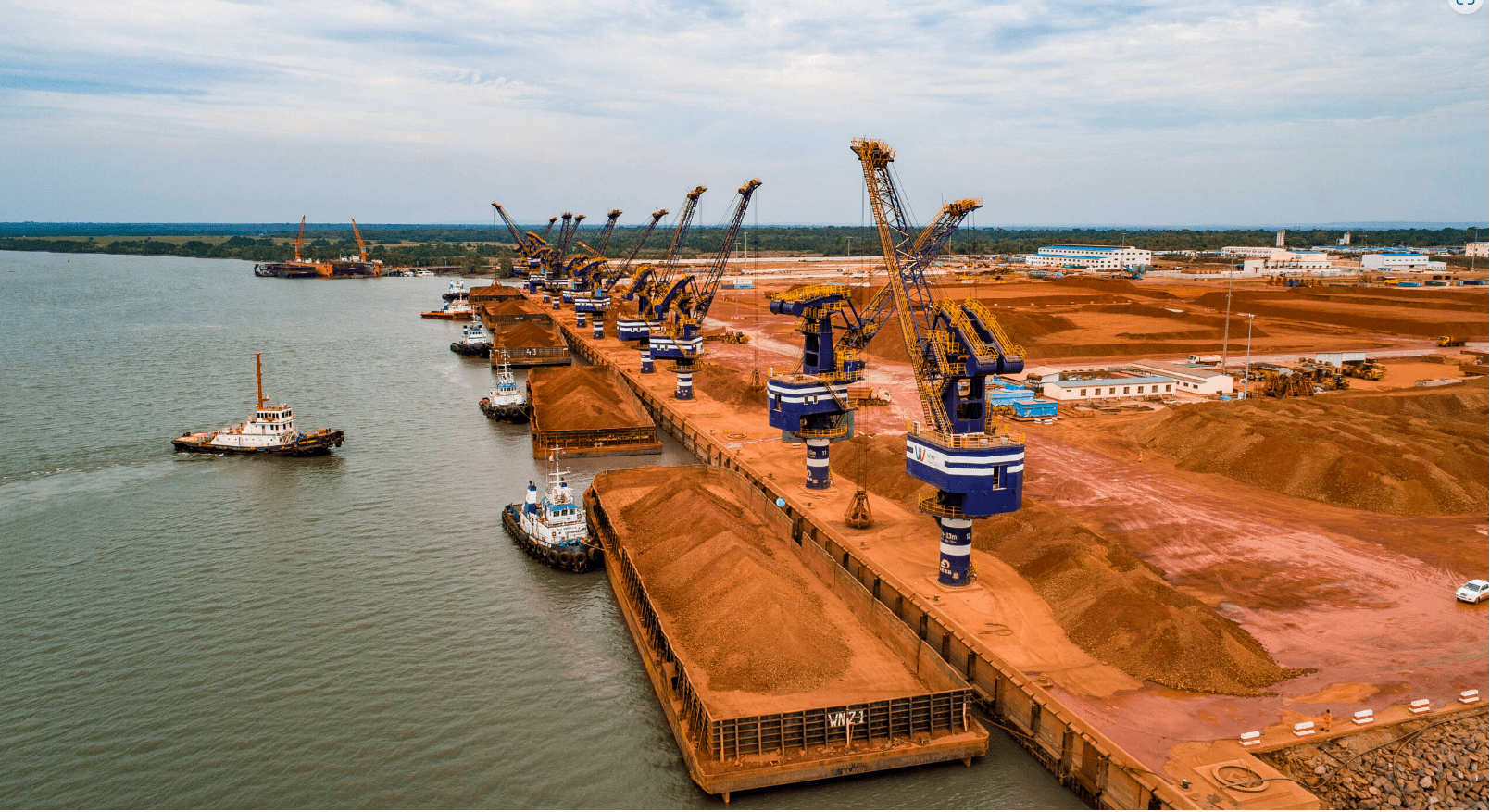
The future port will have a 20-metre draught and will be able to accommodate Capesize class bulk carriers, with a capacity of up to 200,000 tonnes rail according to the information provided.
The project includes four berths, extended bauxite storage facilities with alumina, a container and general cargo terminal and a loop. In
Frastructure must in particular allow bauxite producers to load their cargo directly on large vessels. This organization could limit the use of barge transport and transshipment operations at sea, which are still in use in some mining areas of the country.
Unlike the infrastructure developed for the Simandou iron ore project, mainly for export of this resource, the new structure is designed as a shared platform.
It must host mining, commercial and industrial activities. Bouna Sylla also mentioned the possibility of using the return voyages of vessels exporting bauxite to North America, Europe and China to transport goods destined for assembly in Guinea.
The government plans to develop industrial activities associated with port operations.
In the Simandou 2040 programme, the project has been under study for several years. In 2019, the AfDB provided $2 million in funding. Studies with Royal Haskoning were validated at the preliminary summary project stage in November 2025.
Environmental and social assessments were presented in June 2026. The port must complement the infrastructure of the Simandou project, estimated at approximately $20 billion, which includes a 600-kilometre railway and a deep water export terminal. The first shipments of iron ore from Simandou took place in December 2025.