
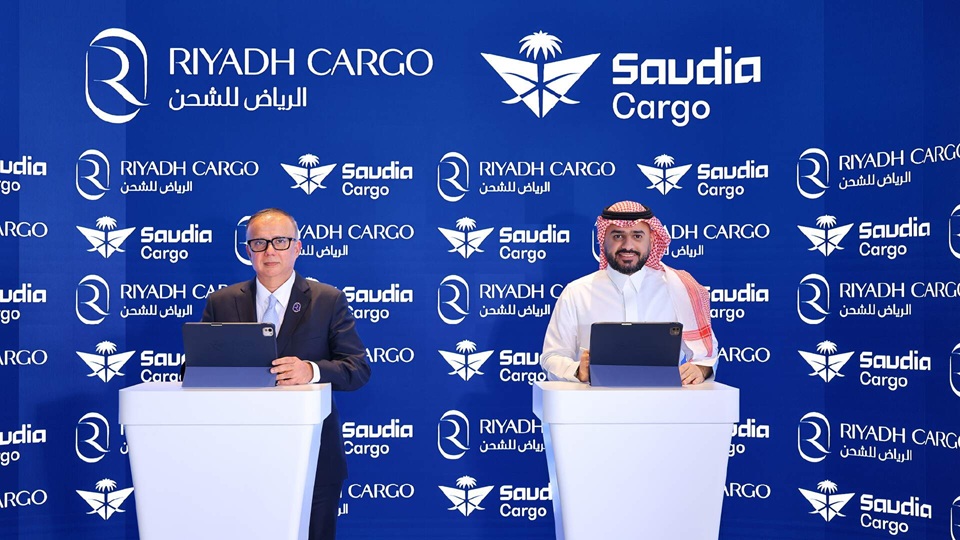
On 28 July 2026, Saudia Cargo and Riyadh Cargo concluded an interline agreement to extend the possibilities for the transport of cargo via Saudi Arabia. In particular, the partnership should facilitate the access of freight forwarders to new roads and accompany the international expansion of Riyadh Cargo.
Saudia Cargo, specializing in air freight transport, and Riyadh Cargo, the cargo division of Riyadh Air, announced the signing of an interline agreement to strengthen connectivity between their networks.
The scheme should allow freight forwarders and logistics players to benefit from new transport options and greater flexibility on several international trade corridors.
The agreement comes as Riyadh Cargo continues to develop its network. The company currently serves London, Dubai, Cairo, Jeddah, Madrid and Malaga, while Mumbai, Kuala Lumpur and Dhaka are among the next announced destinations.
Riyadh Cargo's goal is to serve more than 100 destinations worldwide by 2030. The partnership with Saudia Cargo should enable this coverage to be expanded by building on the networks and operational capabilities of both operators.
This cooperation also takes place in the context of the development of Riyadh Air's international network, of which Riyadh Cargo is dedicated to freight.
Saudia Cargo, for its part, provides an established presence in the air freight transport market. According to both companies, the agreement will make it easier for customers to combine their services and access more destinations beyond the direct routes operated by each company.
For Saudi Arabia, this rapprochement is part of the transport and logistics development objectives of Vision 2030 and the National Transport and Logistics Strategy. The strengthening of connections between Riyadh and Jeddah must in particular accompany the Kingdom's strategy to increase its role in international trade.
The real scope of this cooperation will, however, depend on the development of the networks of the two companies and their ability to develop the volumes of freight on new routes in a sustainable manner.