



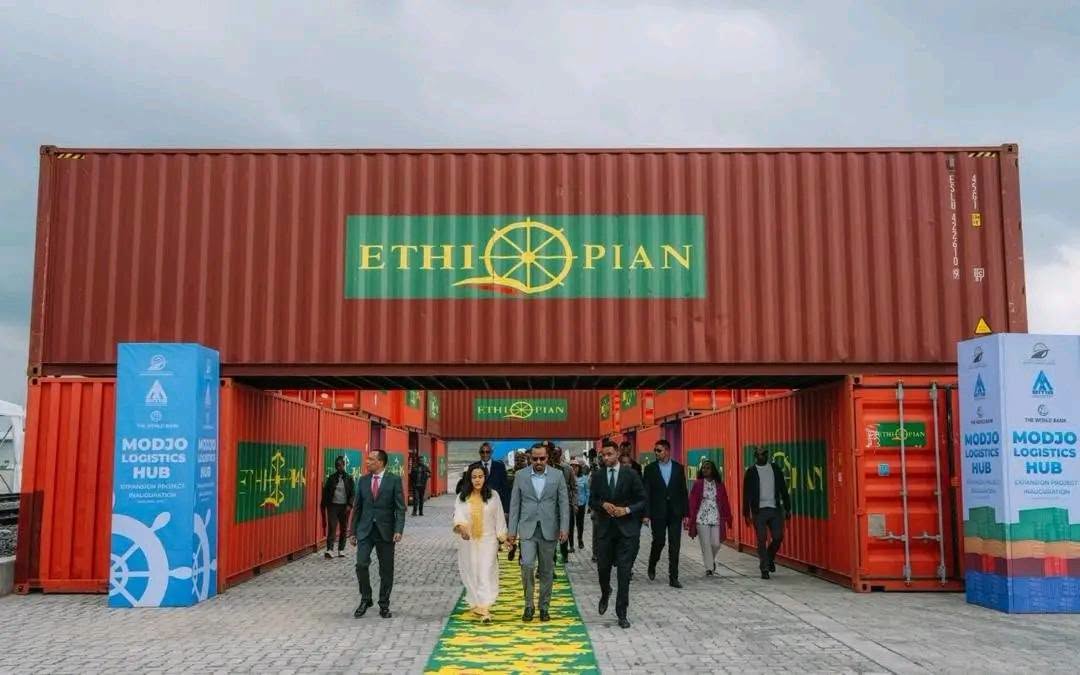
The first phase of the expansion of the Mojo logistics centre was inaugurated on 10 September 2026 by Ethiopian Prime Minister Abiy Ahmed. Installed on 60 hectares, the infrastructure has terminals and warehouses designed to process up to a million containers of 20 feet per year. In particular, it must increase the capacity to process goods and facilitate their transport by rail.
The centre is equipped with the country's first rail portal crane (Rail-Mounted Gantry), designed to transfer containers between the railway line and storage facilities.
This connection is based in particular on the Ethiopia-Djibouti railway line, which is one of the main routes for the transport of goods to the port of Djibouti.
The site also operates on a fully digitized infrastructure, with the aim of reducing processing times and improving the reliability of logistics operations according to the authorities.
The extension also provides for the packing on Ethiopian territory of goods in dry bulk. According to the Prime Minister, this activity must reduce certain foreign currency requirements related to foreign packaging and create jobs.
The centre is thus responsible for handling, storing and preparing goods for Ethiopian and regional markets.
Beyond its connection to the Ethiopia-Djibouti rail network, Mojo is integrated into the Djibouti-Ethiopia-South Sudan-Uganda corridor (DESSU), which links these four countries.
The centre is also presented by the Ethiopian authorities as an infrastructure to accompany trade within the African Continental Free Trade Area (AFTAAF).
Its development is thus part of the modernisation of transport and freight processing infrastructures to facilitate regional trade flows.




