
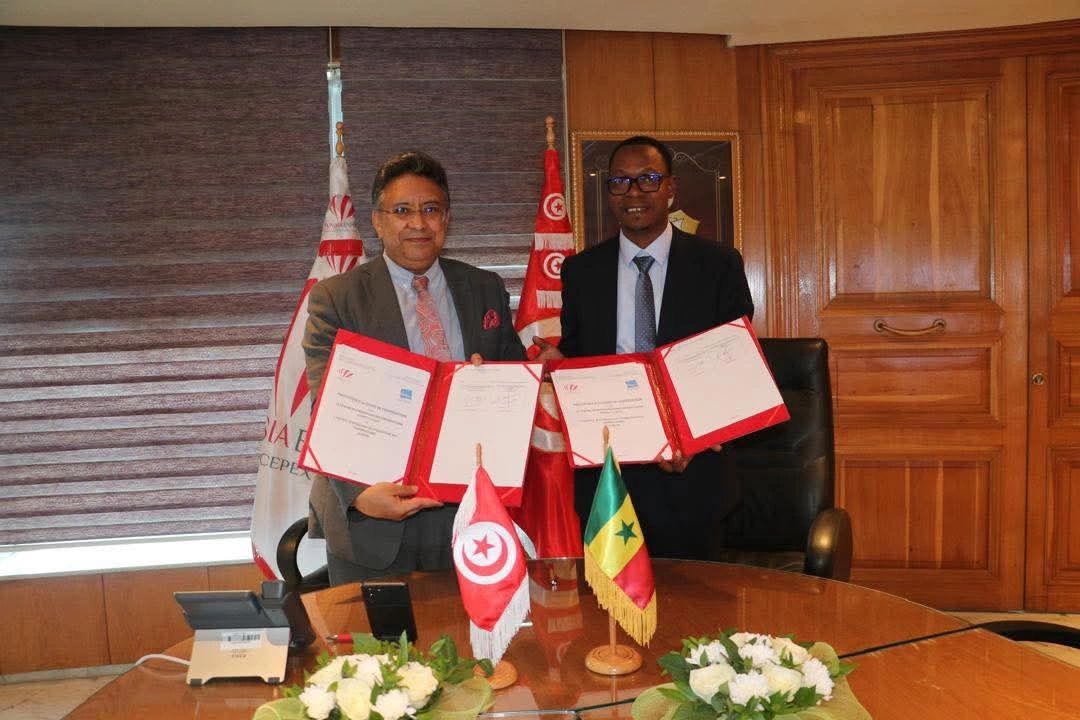
The Tunisian Export Promotion Centre and the Senegalese Export Promotion Agency have concluded a six-year Memorandum of Understanding. It includes joint trade missions, market studies and support for companies in their international development.
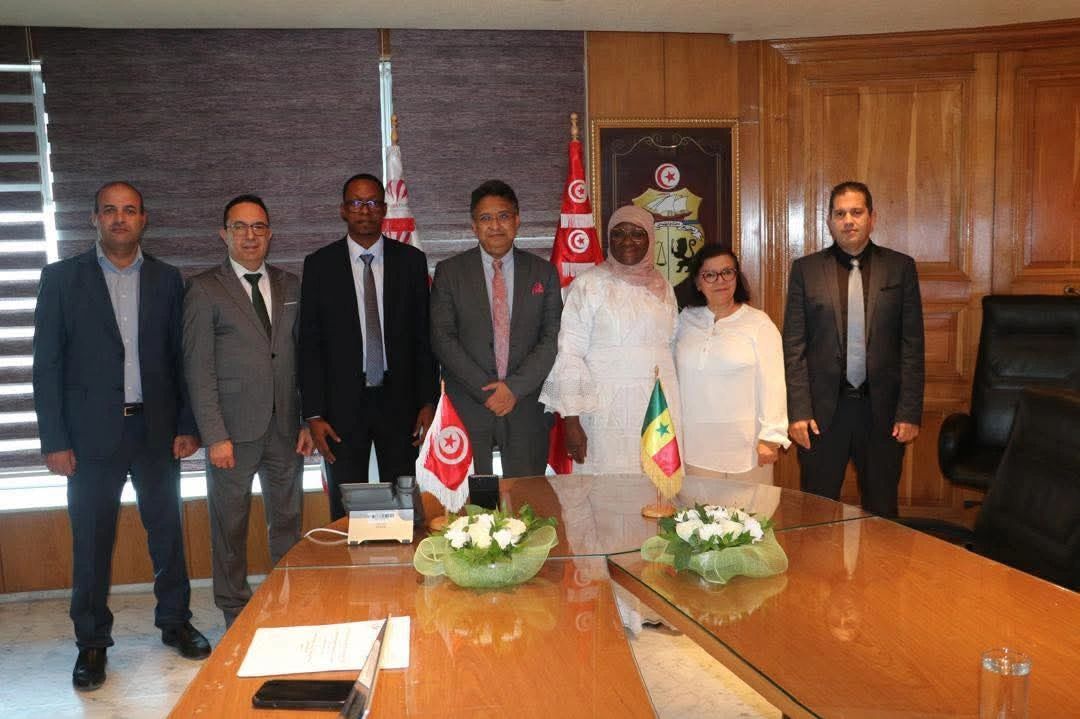
The signing took place on Thursday 29 October 2026 at the Maison de l'Exportateur in Tunis, on the sidelines of a Tuniso-Senegal partnership meeting organised during the official visit of a Senegalese delegation.
The document was signed by Mourad Ben Hassine, President and CEO of the Export Promotion Centre (CEPEX), and Amadou Diallo, Managing Director of the Senegalese Export Promotion Agency (ASEPEX). It updates a partnership initiated in December 2018 and completed with an annex in July 2024.
The new agreement provides for the sharing of economic and trade data, external trade statistics and information on regulations and standards. Both organizations will also organize market research, fairs and trade fairs, as well as buyer and seller missions and business meetings.
They will also be able to conduct prospecting operations in third markets and support the creation of commercial, industrial and technological partnerships between companies in both countries.
Cooperation will include several value chains: agri-food, seafood, textiles and clothing, manufacturing and services. The development of cross-border e-commerce is also one of the priorities.
The Protocol also provides for training, exchange of experts and the sharing of experience between the two institutions and economic operators. Asepex and CEPEX will be able to make recommendations to their respective governments on the facilitation of customs, regulatory and transport procedures.
Implementation will be based on a three-year action plan with annual programming, the designation of focal points and the establishment of a technical committee to monitor and evaluate activities. An annual report will include trade missions, participating companies, partnerships and prospecting.
The agreement was concluded for an initial period of six years, renewable by tacit extension, and aims to further structure trade between the two countries and to facilitate their companies' access to the respective markets, within the framework of African economic integration and the African Continental Free Trade Area (AFTAAf).